Vintage Mid-Century Modern Furniture: Buy It Real or Get the Look
Type “vintage mid-century modern furniture” into a search bar and you get two completely different stores. One sells a 1950s teak sideboard with a cabinetmaker’s stamp under the drawer. The other sells a brand-new sofa built in the mid-century style, shipped this week. Same three words, opposite purchases, and the prices land nowhere near where most people expect.
We’re one of those stores, on the reproduction side, and we say so plainly. That means we have no reason to talk you out of genuine vintage when it’s the right call. This is the honest guide to both routes: what the real thing costs, how to tell it’s real, where the reproductions are worth buying, and how to decide which trip you’re actually on.
Two Meanings of “Vintage Mid-Century Modern”
The phrase gets used for two different things, and sorting them first saves a lot of confusion.
Genuine vintage means an original piece, actually made during the mid-century era, roughly 1945 to 1965. A real Herman Miller Eames lounge from 1962, a Danish credenza built by a named cabinetmaker, a Knoll Barcelona with the period label. It’s a used object with history, and its value depends on who made it, when, and what condition it’s in.
Modern classics, also sold as reproductions, replicas, or “mid-century-style” and “MCM-inspired” furniture, means new manufacture of those designs. Some are licensed by the original brands and cost what the originals cost. Most, ours included, are unlicensed reproductions of designs whose patents expired decades ago, made to the same shapes in honest materials at a fraction of the price.
One is a hunt for a specific old object. The other is a normal furniture purchase you can complete tonight. Knowing which you want changes everything about where you shop and what you pay.
What Genuine Vintage Actually Costs
The same design, three ways to buy it. Tap the gold price to shop ours
| Piece | Genuine vintage | New licensed | Our replica |
|---|---|---|---|
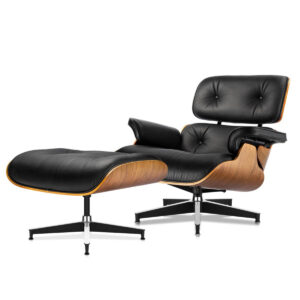 Eames Lounge & OttomanEames, 1956 Eames Lounge & OttomanEames, 1956 | around $6,000used average | from $7,050Herman Miller | $1,499.95 |
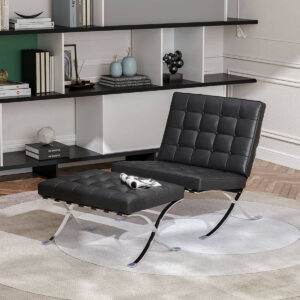 Barcelona Chair & OttomanMies van der Rohe, 1929 Barcelona Chair & OttomanMies van der Rohe, 1929 | around $6,800used average | from $6,500Knoll | from $759.95 |
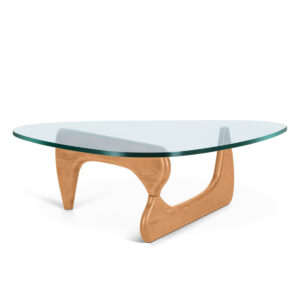 Noguchi Coffee TableNoguchi, 1948 Noguchi Coffee TableNoguchi, 1948 | $1,150 to $9,500vintage range | from $2,595Herman Miller | $699.95 |
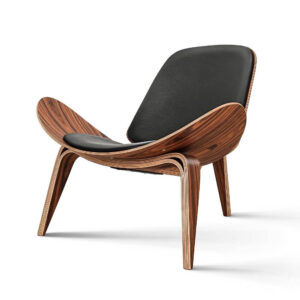 Wegner CH07 ShellHans Wegner, 1963 Wegner CH07 ShellHans Wegner, 1963 | $1,500 to $3,250vintage range | from $4,980Carl Hansen | $549.95 |
Genuine vintage figures are directional dealer-asking averages (1stDibs and Chairish, which skew high); new licensed are current maker’s list; ours are live, and the gold button takes you straight to the product. For the named icons, the honest replica is the cheapest of the three routes, not just cheaper than new. See them together in our Designer Lounge Chairs collection.
Here’s the part that surprises people: for anything with a famous name on it, vintage is usually the expensive option, not the cheap one.
Genuine vintage sells on dealer platforms like 1stDibs and Chairish, where asking prices skew high. Treat these as directional rather than gospel, but the pattern is clear. A vintage Eames Lounge Chair and ottoman ranges from a couple of thousand dollars for a rough one to nearly twenty thousand for a rare early edition, averaging around $6,000.
A new licensed one from Herman Miller starts around $7,050 and climbs past $11,000. A genuine Knoll Barcelona averages close to $6,800 used. A vintage Noguchi table runs from about $1,150 to $9,500, against roughly $2,595 for a new licensed one.
Set those beside a reproduction and the gap is the whole story. Our Eames Lounge Chair Replica is $1,499.95. Our Noguchi coffee table is $699.95. For the icons, the replica isn’t just cheaper than a new original, it’s cheaper than most used ones too.
The one place vintage can genuinely undercut a new reproduction is unsigned teak: anonymous credenzas, side tables, and shelving from workshops nobody catalogued. There, price depends on luck and condition, and a patient shopper can do well. For a named designer piece, patience mostly costs you more. If it’s specifically an Eames you’re weighing used, we go deeper in our guide to buying a used or vintage Eames.
How to Spot the Real Thing: Makers Marks
If you’re buying genuine vintage, the label is where the money is made or lost. Here’s what to look for before you pay original prices.
Herman Miller changed its marks over time, which itself helps you date a piece. Early 1950s furniture carries a round metal medallion; the 1960s brought a rectangular foil label with the logo; later pieces use embossed marks and certification labels. On Eames pieces, check the underside of the shell and the base.
Knoll used silver foil rectangles reading “Knoll Associates” through the 1950s and 60s, with the earliest pieces marked “Hans Knoll” or “Florence Knoll.” Look under the seat, behind a credenza, or beneath a tabletop.
Danish pieces have their own tell, and it’s a good one. The Danish Furnituremakers’ Control mark, a quality-certification scheme established in 1959, appears as a circular seal, an ink stamp, or a small tab set into the wood, usually on the back, the underside, or inside a drawer. Finding it confirms both a post-1959 Danish origin and inspected workmanship. Carl Hansen pieces designed by Hans Wegner carry the maker’s logo and a Wegner signature label, typically hidden under the seat.
Two honest cautions. First, a missing label does not mean a fake: reupholstered and well-used pieces lose paper labels all the time, so weigh construction alongside marks. Second, the construction itself is evidence. Genuine vintage means solid teak, walnut, or rosewood rather than veneer over particleboard, real joinery like dovetails and finger joints, and hand-finished undersides. A one-piece back-and-arm with no visible seam, on a Wishbone chair for instance, is very hard to fake cheaply. Bring a flashlight and a magnifier, and check the places a forger wouldn’t bother finishing.
Buying It New Online: Modern Classics and Reproductions
If you don’t want the hunt, the other route is buying the design new, and this is the larger half of what people mean by the search.
The market runs on a ladder. At the top, the original brands, Herman Miller, Knoll, Carl Hansen, Vitra, sell licensed production at full designer prices. Below that sits a field of reproduction and “modern classic” retailers selling the same shapes for far less. Rove Concepts positions at the premium end of that field with domestic warehousing; Manhattan Home Design and Eternity Modern sell reproductions across a broad range with heavy customization. They’re legitimate businesses, and the designs they sell are legal to reproduce because the patents have long expired.
Where we sit is simple and stated on every product page: openly-labelled reproductions, held in US warehouses in California and New Jersey, built in named materials like top-grain Italian leather, birch plywood, and solid walnut, and shipped in four to seven days. We compete on honesty, price, and availability, not on pretending a new chair is a vintage one. An Eames lounge at $1,499.95 against $7,050-plus licensed, a Noguchi table at $699.95 against $2,595-plus, is the trade we offer, with the word replica said out loud.
Vintage or New: When Each One Wins
Neither route is the right answer on its own. The buyer decides it.
Genuine vintage wins when provenance is the point. A signed, marked, medallioned original can hold or grow in value in a way a reproduction never will, and if you love authentic patina, original rosewood, and the story of a specific piece, nothing new replaces that. It’s also the route if you’re chasing one particular rare object and you enjoy the search.
A new reproduction wins when you want the room more than the relic. It arrives in known condition with a warranty and returns, in consistent materials, this week, with no gamble on a stranger’s photographs and no restoration bill waiting. If you need matched multiples, a set of dining chairs that actually match, vintage rarely supplies them and new production always does. And on the icons, it costs a fraction of either the used or the licensed price.
Put plainly: vintage is the collector’s and the investor’s route; a labelled reproduction is the route for the person who wants the look, in good condition, at a sane price, now. Those aren’t the same buyer, and we don’t pretend they are.
What We Carry, Honestly
We’re the reproduction route, and here is the actual range, all of it openly labelled as replicas, never as vintage or licensed originals.
For seating, the icons: the Eames Lounge Chair and ottoman at $1,499.95, the Barcelona Chair and ottoman from $759.95, and the Hans Wegner CH07 Shell Chair at $549.95. They live together in our Designer Lounge Chairs collection, and the chair-by-chair story is in our mid-century modern chair guide.
For tables and sofas, the Noguchi coffee table at $699.95, and on the softer side the Ligne Roset Togo, the Camaleonda, and the Soriana, all mid-century Italian designs.
For storage, one honest note. We don’t make a warm-teak Danish credenza, and if that specific object is what you’re picturing, genuine vintage is genuinely your best route. What we do carry is the USM Haller system, Fritz Haller’s 1965 Swiss modular design in chrome and colour, a true mid-century classic in a completely different, systems-built idiom. The rest of the range is in the furniture collection.
So, Real or Reproduction?
Match the answer to the trip you’re on.
If you want a specific original with provenance, buy vintage. Learn the marks, budget for the fact that named icons cost more used than most people expect, and enjoy the hunt. If you want the mid-century look in your room, in good condition, at a fraction of the licensed price and without the search, buy a labelled reproduction, and ours ship in days. If you’re furnishing a whole room, mix freely: a genuine vintage find where it matters, honest reproductions for the icons that would otherwise cost five figures.
Either way, you end up with a design good enough to have outlasted the decades of furniture that came after it. Vintage asks for your patience and a bigger budget. A reproduction just asks you to be comfortable owning a copy, labelled honestly as one. Neither is the wrong answer.
FAQ
Is vintage mid-century modern furniture worth it?
For provenance, patina, and investment, yes: a genuine, marked original can hold its value in a way a reproduction cannot. For the look alone, a reproduction is usually cheaper and lower-risk, since it arrives in known condition with a warranty. The honest test is whether you’re buying the object’s history or its design.
Is it cheaper to buy vintage or new?
For named icons like the Eames Lounge, Barcelona, or Noguchi pieces, genuine vintage is usually pricier than a good reproduction, and often pricier than a new licensed one too. The exception is anonymous, unsigned teak, where vintage prices are variable and a patient shopper can save.
How can you tell if furniture is genuinely mid-century?
Check the makers marks: a Herman Miller medallion or foil label, a Knoll “Knoll Associates” label, or the Danish Furnituremakers’ Control seal on Danish pieces, usually on the underside, the back, or inside a drawer. Then check construction: solid teak, walnut, or rosewood, real joinery, and hand-finished undersides. A missing label alone doesn’t prove a fake, since older pieces lose them.
Where can I buy mid-century modern furniture online?
The original brands sell licensed pieces at full price, and a field of reproduction retailers sells the same designs for far less. We’re one of them, selling openly-labelled reproductions from US stock in named materials, shipped in four to seven days, at a fraction of licensed or vintage prices.
What does “modern classics” furniture mean?
It’s new furniture made in the mid-century modern style, either licensed by the original brands or reproduced without a license once the designs’ patents expired. It’s distinct from genuine vintage, which is original period production. Both give you the look; only vintage gives you the history.