The Best Leather Office Chairs for a Mid-Century Look (Honestly Compared)
A leather office chair with the vintage, mid-century look is one of the easiest upgrades a room can get and one of the easiest purchases to get wrong. The market is full of them, from $150 to $6,000, and almost every listing hides the single thing that decides whether yours still looks good in five years.
We sell replicas of the Eames office chairs, so we have a stake in one corner of this market and we’ll say so plainly. That’s exactly why this is the honest map: the grade that actually matters, the real options compared including the ones we don’t sell, and where the icons fit against the rest.
First, the Only Thing That Actually Matters: The Grade
Every problem with a cheap leather chair traces back to one word the listing left vague. “Leather” on its own is close to meaningless, because it covers a ladder of materials that behave nothing alike. From best to worst:
- Full-grain is the top layer of the hide with its natural grain intact. It’s the most durable and the most expensive, and it develops a patina instead of wearing out.
- Top-grain is the layer just below, lightly sanded and finished. It’s the sweet spot for furniture: nearly as tough, more consistent, and the grade most good chairs actually use.
- Genuine leather is the honest trap. It is real leather, so the word isn’t a lie, but in the trade it’s a lower grade, often a split layer coated in polyurethane and embossed with a fake grain. It sounds premium and sits in the middle of the pack. Real, but not the good stuff.
- Bonded leather is leather scrap ground into pulp and glued to a backing. US labeling rules bar sellers from calling it “leather” without disclosure, which tells you how far it is from the real thing.
- PU, faux, or vegan leather isn’t leather at all. It’s plastic with a grain printed on it.
Here’s what that means at the keyboard. Full-grain and top-grain age; bonded and PU peel. The cheap coatings commonly start cracking and flaking within a couple of years of daily use, and once delamination begins it accelerates. So the buying rule is simple: if a listing won’t tell you the grade, assume it’s the cheapest one that still lets them write “leather,” and price it accordingly.
That one check does more than any brand comparison, because the brand names are where the market starts playing games.
The Icons: Eames Office Chairs in Leather
The three icons, all in top-grain leather
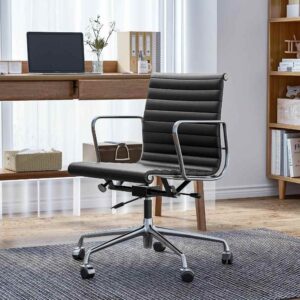 Top-grain
Aluminum Group
1958 · the everyday desk chair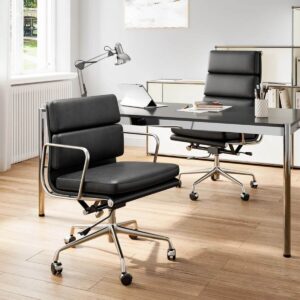 Top-grain
Soft Pad
1969 · the long-day chair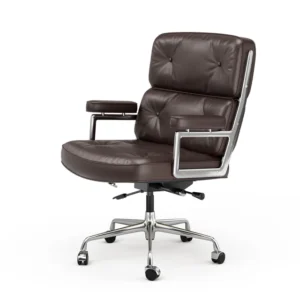 Top-grain
Executive
Time-Life, 1961 · the boardroom chairGenuine prices are Herman Miller list, checked August 2026. Ours are honest replicas, top-grain leather, US stock, free shipping and 30-day returns. Not sure which model? Our chooser guide walks through all three.
If you’re picturing a mid-century leather office chair, you’re very likely picturing an Eames. The Aluminum Group, the Soft Pad, and the Executive have been the reference point for the look since the late 1950s, which is why the whole category orbits them.
The genuine chairs are made by Herman Miller and run from $2,395 for a base Aluminum Group to $6,345 for a top-spec Executive.
Ours are honest replicas of the same designs at a fraction of that, and because we just told you to read the grade, here’s ours without the marketing fog: all three, the Aluminum Group ($649.95), the Soft Pad ($669.95), and the Executive ($669.95), use top-grain leather on their seating surfaces. That’s the grade to look for, named on every model, which is more than most of the listings in this roundup manage.
That’s the trade we offer: the exact iconic design, disclosed materials, US stock, and a 30-day return window, for a fraction of the licensed price. Not the Herman Miller original, and we’ve written honestly about what you give up by buying a replica.
If the Eames look is what you’re after, our guide to which of the three office chairs to buy walks through the differences, and the full collection lays them out together.
The Eames designs aren’t the only honest option, though, and a good roundup names the others.
The Best Non-Eames Real-Leather Options
If you want a mid-century leather office chair that isn’t an Eames, a few real ones survive the grade test.
The strongest we found is Article’s Gerven at $499. Article states it plainly: 100 percent top-grain, full-aniline Italian leather, on a wood and steel frame, weight-tested to 300 pounds. That’s a better leather disclosure than most chairs twice the price, and at $499 it’s genuinely good value. If you don’t need the Eames silhouette specifically, this is the one to look at first.
Laura Davidson sells a Pacific line, ribbed at around $475 and padded at around $575, described as Italian leather on an aluminum base. The grade wording is thinner than Article’s, so treat “Italian leather” as the ceiling of what’s confirmed rather than a promise of top-grain, and check current stock before you commit.
West Elm’s Cooper chair offers a genuine top-grain leather option, running from around $600 depending on the leather and colour you pick. It’s a cleaner, less overtly retro shape than the Eames chairs, which some rooms will prefer.
None of these is hiding behind the word “leather,” which is precisely why they’re worth naming. The market below them is a different story.
If You Want Genuinely Vintage (Secondhand)
Some people searching for a vintage office chair mean it literally: an actual old chair, not a new one styled to look old. That’s a real and often better option, with its own tradeoffs.
Genuine vintage leather executive chairs turn up on 1stDibs, Chairish, and specialist dealers, and they aren’t cheap. A well-kept vintage leather executive chair commonly runs anywhere from around $650 to $2,500 and up, with icons like a Charles Pollock for Knoll landing around $1,250 to $1,650. What you buy is authenticity and a patina no new chair has, along with materials from an era that used more full-grain as standard.
What you give up is choice and certainty. No colour options, no size selection, no warranty, and condition you have to judge from photos. If you love the idea of the real thing and you’re patient enough to wait for the right listing, this beats any new reproduction on character. If you want a specific look delivered this week, it doesn’t.
The Marketplace Tier (Read the Grade First)
Then there’s the floor of the market: the $150 to $400 “leather office chairs” that fill Amazon and Wayfair. This is where the grade lesson earns its keep.
This tier is where mislabelling concentrates. Expect PU or bonded material described as vaguely as the platform allows, plastic or composite bases dressed to look like metal, and mid-century proportions that are close in a thumbnail and wrong in person. The US labeling rule that governs the word “leather” exists largely because of this tier. None of that makes every marketplace chair a mistake, but it does mean you run the grade check before you trust the photo, every time. A listing that won’t name its leather at this price has told you what it is by staying quiet.
So Which Leather Office Chair Should You Buy?
Match the chair to what you actually want.
If it’s the iconic Eames look, an honest replica gets you there for a fraction of the genuine price, and ours are $649.95 to $669.95 with the grades stated. If you want a fine mid-century leather chair and don’t need the Eames name, Article’s Gerven at $499 is the honest value pick. If you want the real vintage article and you’re patient, the secondhand market rewards you with character no reproduction can match. And if you’re shopping the marketplace floor, that’s fine too, as long as you make the listing prove its leather before you believe it.
Whichever way you lean, the grade is the test that saves you from the expensive mistake, so make every chair on your shortlist pass it before the photo talks you into anything. When you’re ready to see the icons in leather, the full Eames chair collection is the place to start.
FAQ
What’s the best leather for an office chair?
Full-grain is the most durable and the most expensive; top-grain is the practical best for most chairs, nearly as tough and more consistent. Below those, “genuine leather” is real but a mid grade, and bonded or PU leather peels within a few years. If a chair states top-grain or full-grain, that’s the signal to look for.
Is “genuine leather” good?
It’s real leather, so it isn’t fake, but in the trade it’s a lower-to-mid grade, often a split layer finished with polyurethane. It’s serviceable and better than bonded or PU, just not the premium tier the name implies. The words that actually signal quality are top-grain and full-grain.
How long does a leather office chair last?
It depends almost entirely on the grade. Top-grain and full-grain chairs are commonly expected to last many years and develop a patina rather than wearing out, while bonded and PU coatings often begin peeling within roughly two to five years of daily use. Care matters, but grade sets the ceiling.
What’s a good vintage-style leather office chair under $700?
Several. Our Eames replicas run $649.95 to $669.95 with top-grain leather across all three models. Article’s Gerven is $499 in top-grain full-aniline leather. Laura Davidson’s Pacific chairs sit around $475 to $575 in Italian leather. All three name their materials, which already puts them ahead of most of the field.
Are vintage office chairs worth it?
If you want authenticity and character and you’re willing to wait for the right piece, yes. Genuine vintage leather executive chairs run from around $650 into the thousands and come with real patina and often better base materials. The tradeoff is no choice of colour or size, no warranty, and condition you judge from photos.
How can I tell real leather from fake in a listing?
Look for the grade named outright, top-grain or full-grain rather than a bare “leather” or “genuine leather.” Check the price against the claim: a “leather” executive chair for $150 is not top-grain anything. And look for what’s disclosed about the base and frame; sellers who name their materials tend to name all of them, and sellers who hide one are usually hiding more.